



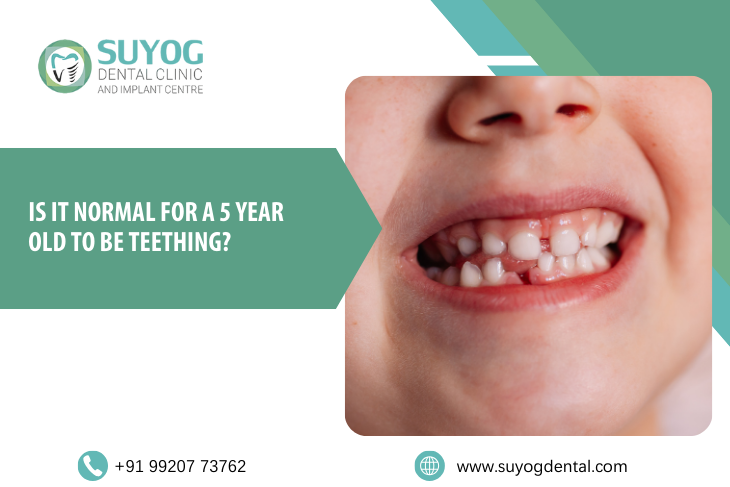
Is It Normal For A 5-Year-Old To Be Teething?
You finally made it past the "terrible twos," survived the preschool sniffles, and successfully negotiated the daily battle over eating broccoli. You thought the days of drool-soaked bibs, sleepless nights, and gnawing on everything in sight were safely tucked away in the baby photo album. But then, your five-year-old looks up at you with a hand in their mouth, complaining of a dull ache, or perhaps you spot a familiar rosy flush on their cheeks.
Wait a minute……teething? Again?
It feels like a glitch in the parenting matrix. You might find yourself frantically searching the web or asking friends, "Is it normal for a 5-year-old to be teething?" We see this look of confusion on parents' faces all the time. The answer is a resounding YES.
While we usually associate teething with chubby babies and rubber rings, age five is actually the start of the "Second Wave." If you are currently looking for kids dental treatment in Mahim, at Suyog Dental Clinic, we help you understand this transitional phase is the best way to keep your child (and your sanity) in good shape.
The "Big Six" Mystery: What’s Actually Happening?
At age five or six, your child isn't just growing out of their shoes; their jaw is making room for the "heavy hitters" of the dental world. Most parents expect a tooth to fall out before a new one comes in, but the 6-year molars (also called the First Permanent Molars) don't play by those rules.
1. No Tooth Loss Required: These molars erupt in the very back of the mouth, behind the last baby teeth. They don't replace anything; they just show up.
2. The "Space Maker": These teeth are the anchors of the mouth. They determine the shape of the face and the alignment of all future adult teeth.
3. The Timeline: While they are called "6-year molars," many children start feeling the pressure and gum swelling as early as age five.
Symptoms of the "Second Wave" (It’s Not Just in Your Head!)
Teething at five looks a little different than it did at six months. Your child can now use their words, but the physical symptoms can still be quite broad. Here is what to look for:
1. The "Back of the Mouth" Ache: They might complain of a headache or an earache because the pressure from the molar is radiating.
2. Swollen Gums: You might see a "lump" or redness at the very back of the dental arch.
3. Chewing on Fingers: Just like a baby, they might unconsciously chew on their shirt collar or fingers to relieve the pressure.
4. Low-Grade Grumpiness: Let’s face it, having a tooth push through bone and tissue is exhausting. Expect a bit more "drama" during homework or dinner time.
5. Wobbly Baby Teeth: Around this same time, the front bottom teeth often start to wiggle. This double whammy of new teeth coming in and old teeth leaving can make the mouth feel very sensitive.
Why This Stage is Critical for Kids Dental Treatment In Mahim
This isn't just a "phase" to ignore. The 6-year molars are the most important teeth your child will ever get. Because they are at the very back, they are often missed during brushing, making them prime targets for cavities.
At Suyog Dental Clinic, we emphasize that this is the perfect time to visit us. Why?
1. Deep Grooves: These new molars have deep pits and fissures that trap food easily.
2. Weak Enamel: New "adult" enamel is actually a bit soft for the first year it’s out, making it extra vulnerable to sugar.
3. Alignment Check: We can see if the jaw is growing wide enough to accommodate these large teeth without crowding.
The Parent’s Survival Guide: How to Help Your 5-Year-Old
Since your child is older now, you have more tools in your kit than just a chilled washcloth. Here is how to manage the discomfort:
1. Cold Treats (The Healthy Kind): Frozen yogurt, chilled watermelon, or even a cold fruit smoothie can numb the back of the gums naturally.
2. Salt Water Rinses: If the gums look red and angry, a warm salt water rinse helps keep the area clean and reduces inflammation.
3. Massage: Gently rubbing the area with a clean finger (if they’ll let you!) can provide temporary relief from the pressure.
4. Distraction: Unlike babies, 5-year-olds can be distracted with a good book, a movie, or a trip to the park. Sometimes, focusing on something else is the best medicine.
Maintenance 101: Caring for the New Arrivals
When those molars finally peek through, the real work begins. If you’re searching for kids dental treatment in Mahim, we are here to explain to you ways to prevent future fillings.
The Brushing "Reach-Back"
Most kids brush their front teeth beautifully but stop where the "corner" turns. You’ll need to help them angle the brush all the way back to scrub those new molars.
The Power of Sealants
At Suyog Dental Clinic, we often recommend Dental Sealants as soon as these molars fully erupt. It’s a thin, protective coating that "fills in" the deep grooves, acting like a raincoat for the tooth. It’s a painless way to prevent 90% of molar cavities.
Watch the Sugar
Now that they are in school, they might have more access to sweets, juices, and sticky snacks. Remind them that these new teeth are "forever teeth", they don't get a second chance with these!
When Should You Worry?
While teething is normal, sometimes things don't go exactly to plan. Keep an eye out for these "Red Flags":
1. Eruption Cysts: Sometimes a small, bluish-purple bubble forms over the tooth. It’s usually just a bit of fluid, but it’s worth having us look at it.
2. High Fever: Teething might cause a tiny rise in temperature, but a real fever (over 101°F) usually means a virus, not a tooth.
3. The "Shark Tooth" Effect: If the permanent tooth is coming in behind the baby tooth (creating a double row), it might be time for a quick extraction to clear the path.
A Quick "Teething vs. Cavity" Check
| Symptom | Teething (6-Year Molar) | Potential Cavity |
|---|---|---|
| Location | Very back of the jaw | Any tooth with visible spots |
| Pain Type | Dull, "heavy" pressure | Sharp, especially with cold/sweets |
| Gum Status | Red, swollen, or "bulging" | Usually looks normal |
| Age | 5 to 7 years old | Any age |
Investing in Their Future Smile
Teething at age five is a major milestone, it’s the bridge between childhood and "big kid" status. It’s a sign that your child is growing exactly as they should.
By staying proactive with Kids Dental Treatment In Mahim, you are ensuring that these new permanent teeth stay healthy for the next 70+ years. It’s much easier to protect a new tooth than it is to fix a broken one later.
The "Second Wave" is Just the Beginning
So, if your 5-year-old is acting like a teething infant again, take a deep breath. They aren't going backward; they are moving forward! This phase of "Big Kid Teething" is a perfectly normal, although slightly uncomfortable, part of growing up.
Keep the cold snacks ready, make the toothbrush go all the way to the back, and keep your regular check-ups. At Suyog Dental Clinic, for Kids Dental Treatment In Mahim we are here to walk this path with you, ensuring that every new tooth that arrives is greeted with a healthy environment and a happy smile.