



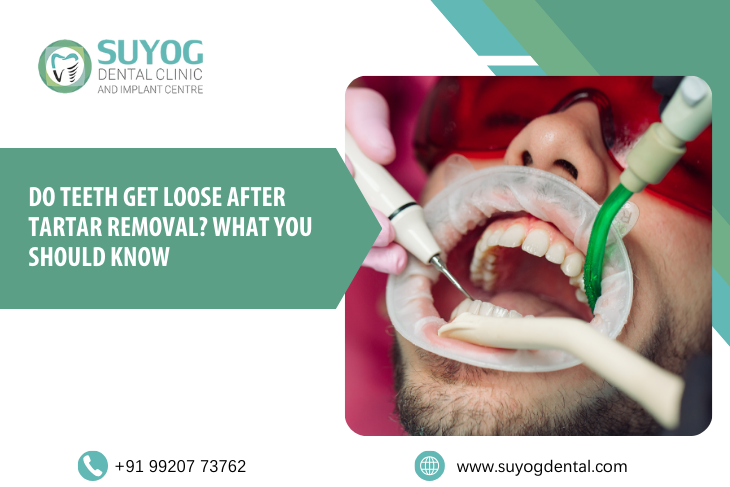
Do Teeth Get Loose After Tartar Removal? What You Should Know
Imagine a tree surrounded by layers of hardened soil and debris. Over time, that buildup might hide the true condition of the roots beneath. When the extra layers are cleared, the roots are exposed for what they really are, healthy or weakened. Something similar happens in your mouth during tartar removal.
Tartar is a hardened layer of plaque that attaches tightly to the teeth and gums. It hides the actual health of the gums, sometimes masking underlying issues. Many people are surprised when they feel slight looseness after a cleaning session and wonder if the procedure caused it. If you’ve had a teeth cleaning or are planning to schedule one, understanding why this happens can help you feel confident about the process.
At Suyog Dental Clinic, we provide teeth cleaning in Mahim, and this blog will help to understand how teeth really become loose after cleaning, why it may seem that way, and what you should consider before and after your cleaning.
Ready to Improve Your Gum Health?
Understanding What Tartar Really Does to Your Teeth
To understand tooth looseness, you must understand how tartar behaves.
Tartar (calculus) builds up when plaque stays on teeth for too long. Because it is hard and rough, it:
1. Irritates the gums
2. Traps more bacteria
3. Increases inflammation
4. Pushes gums away from the teeth
5. Destroys the bone supporting the teeth
When this continues for months or years, the gums and bone weaken, making teeth appear stable only because tartar is holding them tightly in place, similar to how cemented soil can make a weak tree trunk seem strong.
Removing tartar doesn’t cause looseness; it simply reveals what the tartar was hiding.
Do Teeth Really Get Loose After Tartar Removal?
Here’s the short answer: No, tartar removal does not loosen healthy teeth.
If a tooth feels loose after a cleaning, it means:
1. The supporting tissues were already weakened before the cleaning
2. The tartar was acting like a temporary hard splint
3. Gums were inflamed or infected
4. Bone loss had already occurred
Cleaning removes the false “support” provided by tartar, showing the true stability of the tooth.
Healthy gums and bone hold teeth firmly. Cleanings simply help restore gum health, not damage it.
Why Some Teeth Feel Loose After Cleaning: A Detailed Breakdown
Let’s look at the common reasons behind this sensation.
1. Bone Loss From Gum Disease
Periodontitis destroys the bone around teeth.
When tartar is removed:
1. The infection becomes visible
2. Swollen gums shrink
3. Previously hidden pockets become apparent
This makes a weakened tooth feel looser.
2. Gums Shrink Back to Their Normal Position
Inflamed gums swell, making teeth feel tightly packed.
After cleaning:
1. Gum swelling reduces
2. Gums reattach slowly
3. Teeth may feel slightly “different”
This is a positive sign—healing has begun.
3. Teeth Were Already Loose Before Cleaning
Many people don’t realize they had mobility because:
1. Tartar masked movement
2. Pain was minimal
3. The buildup acted like a brace
Once removed, the condition becomes obvious.
4. Sensitivity After Cleaning
Exposed roots or inflamed gums can cause temporary sensitivity that feels like looseness.
5. Deep Cleaning Effects
If deep cleaning was needed, it means infection had already damaged gums.
Temporary looseness is expected during healing.
Does This Mean Cleaning Is Harmful? Absolutely Not.
Skipping cleaning allows tartar to worsen gum disease.
Regular professional cleanings:
1. Prevent bone loss
2. Reduce gum infection
3. Improve breath
4. Support gum reattachment
5. Slow down tooth mobility
Cleaning protects teeth; it doesn’t weaken them.
What Happens During the Procedure at Suyog Dental Clinic?
Here’s what you can expect during teeth cleaning in Mahim at our clinic.
1. Examination of Gums and Teeth
The dentist checks:
1. Gum health
2. Pocket depth
3. Presence of infection
4. Level of tartar buildup
2. Scaling to Remove Tartar
Ultrasonic or manual scalers gently remove hard deposits.
3. Deep Cleaning (If Needed)
For heavy tartar or gum disease, root planing smoothens the root surface to promote healing.
4. Polishing
This smoothens the tooth surface, preventing plaque from sticking again.
5. Instructions for Aftercare
Advice includes brushing technique, mouthwash use, and follow-up visits.
Signs That Tartar Has Already Affected Tooth Stability
If you notice any of these symptoms, you are likely experiencing gum disease:
1. Persistent bad breath
2. Bleeding while brushing
3. Red or swollen gums
4. Gum recession
5. Pus between teeth
6. Mobility
7. Tooth spacing increasing
8. Cleaning is essential to stop the progression.
How Long Does Looseness Last After Cleaning?
It depends on the severity of gum disease:
1. Mild cases: No looseness at all
2. Moderate cases: A week or two
3. Advanced gum disease: Several weeks while healing stabilizes the tooth structures
4. Gums heal over time, and the tooth often becomes firmer as inflammation reduces.
How to Strengthen Your Teeth After Tartar Removal
The healing process needs your active care. Here’s what you can do:
1. Maintain Excellent Oral Hygiene
1. Brush twice daily
2. Floss or use interdental brushes
3. Use chlorhexidine or anti-bacterial mouthwash (if advised)
2. Avoid Hard and Sticky Foods
Foods like nuts, chikki, ice cubes, or caramel can strain weak teeth.
3. Get Regular Dental Checkups
Every 6 months, or more frequently if you have gum disease.
4. Don’t Smoke
Smoking delays healing and worsens gum infection.
5. Consider Periodontal Therapy (If Needed)
Your dentist may recommend:
1. Laser therapy
2. Deep cleaning every 3–4 months
3. Gum surgery in severe cases
Myths About Teeth Cleaning That Need to Be Debunked
Myth 1: Cleaning loosens teeth
Truth: Only diseased teeth loosen; cleaning reveals pre-existing issues.
Myth 2: Cleaning makes teeth sensitive forever
Truth: Sensitivity is temporary and reduces as gums heal.
Myth 3: Cleaning wears away enamel
Truth: Professional cleaning is gentle and enamel-safe.
Myth 4: Scaling should be done only once in a lifetime
Truth: Tartar forms continuously, and regular cleaning is essential.
How Suyog Dental Clinic Ensures Safe and Comfortable Cleaning
At Suyog Dental Clinic, our focus is on gentle care and long-term gum health. During every cleaning, we ensure:
1. Patient comfort
2. Thorough removal of tartar
3. Careful gum assessment
4. Guidance on homecare
5. Monitoring for gum disease progression
If you feel nervous about cleaning or have gum symptoms, our team ensures a supportive and clear treatment journey.
FAQs
1. Should I avoid cleaning if my teeth are loose?
Cleaning is essential to improve mobility and prevent buildup that worsens gum issues.
2. Does deep cleaning hurt?
There may be mild discomfort, but local anesthesia ensures a comfortable experience.
3. Can tartar grow back?
Plaque forms daily and hardens into tartar within months, so regular cleanings are important.
Ready to Improve Your Gum Health?
Cleanings protect you from tooth loss, gum disease, and long-term dental damage. Delaying them only allows problems to grow hidden beneath tartar.
If you’re worried about tooth movement or experiencing gum symptoms, timely checkup at Suyog Dental Clinic provides gentle, thorough teeth cleaning in Mahim and personalized gum care to ensure your teeth remain strong, healthy, and stable for years to come.