



Can I Undergo Full Mouth Rehabilitation If I Have Diabetes?
There’s a certain hesitation that comes with living with diabetes. Every medical decision feels bigger. More careful. More loaded with “what if.”
Now add dental problems to that.
Loose teeth. Missing teeth. Difficulty chewing. Jaw discomfort. You’re told you may need extensive dental work. And the first thought that follows is simple:
“Is it even safe for me?”
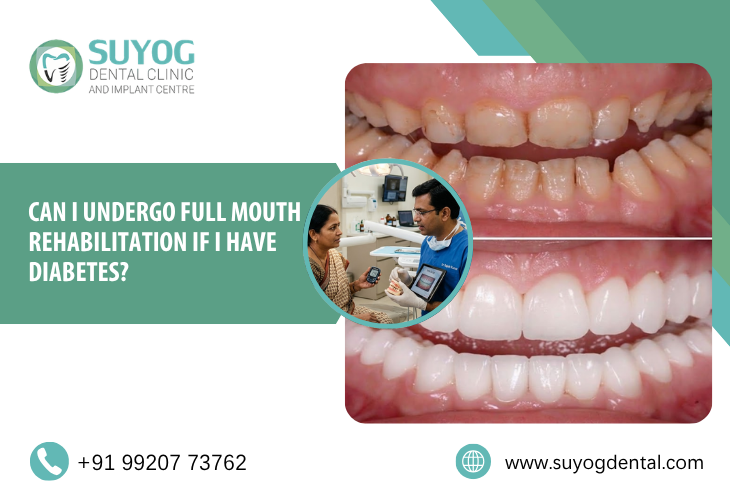
Many patients who visit Suyog Dental Clinic with similar concerns ask about full mouth rehabilitation in Mahimand whether diabetes automatically disqualifies them from such treatment. The short answer is no. But the complete answer deserves a closer look.
Understanding What Full Mouth Rehabilitation Really Means
Before talking about diabetes, it helps to understand the treatment itself.
Full mouth rehabilitation is not a single procedure. It is a customised plan designed to restore:
- Damaged teeth
- Missing teeth
- Bite alignment
- Jaw function
- Overall oral health
It may involve:
- Crowns
- Bridges
- Dental implants
- Root canal treatments
- Gum therapy
- Bite correction
The goal is not cosmetic alone. It is functional. It helps you chew comfortably, speak clearly, and protect your jaw joints.
How Diabetes Affects Oral Health
Diabetes does not just affect blood sugar. It impacts healing and infection control across the body, including the mouth.
Common dental concerns in diabetic patients include:
- Gum infections
- Delayed wound healing
- Higher risk of periodontal disease
- Dry mouth
- Increased chances of infection
Uncontrolled diabetes can weaken the body’s ability to fight bacteria. Since the mouth naturally contains bacteria, this becomes important during any dental procedure.
This is why careful planning matters.
Does Diabetes Automatically Rule Out Rehabilitation?
No, it does not.
The key factor is control.
If your blood sugar levels are stable, monitored regularly, and managed under a doctor’s guidance, then dental procedures, including complex ones, can be performed safely.
Before starting full mouth rehabilitation in Mahim, our dentists typically coordinate with your physician to understand:
- HbA1c levels
- Medication schedule
- Overall health condition
This collaborative approach reduces risk and ensures safe treatment.
Why Blood Sugar Control Matters Before Treatment
High blood sugar can affect:
- Healing speed
- Infection risk
- Gum health
- Implant success rate
When sugar levels are well managed:
- Healing improves
- Swelling reduces faster
- Complications decrease
That is why patients are often advised to stabilise diabetes before beginning extensive dental work.
It is not about denying treatment. It is about preparing properly.
Can Dental Implants Be Done If You Have Diabetes?
Many people worry specifically about implants.
The concern usually revolves around healing.
Research shows that implants can be successful in diabetic patients when:
- Blood sugar is controlled
- Oral hygiene is maintained
- Regular follow-ups are attended
Uncontrolled diabetes may increase failure risk, but controlled diabetes does not automatically prevent implant placement.
Each case is evaluated individually.
Safety Measures Taken During Treatment
At Suyog Dental Clinic, extra precautions are taken for diabetic patients undergoing full mouth rehabilitation in Mahim.
These may include:
- Scheduling shorter appointments
- Morning appointments when sugar levels are more stable
- Monitoring vital signs
- Prescribing preventive antibiotics when required
- Using minimally invasive techniques
These adjustments make a significant difference in patient safety.
What About Gum Health?
Gums are particularly sensitive in diabetic patients.
Poorly controlled diabetes can worsen:
- Gum inflammation
- Bone loss
- Tooth mobility
Before starting major restorative work, gum health is stabilised through:
- Professional cleaning
- Deep scaling if necessary
- Infection control
Healthy gums create a stable foundation for rehabilitation.
Is Healing Slower If You Have Diabetes?
Healing can be slightly slower in some cases. However, the difference is manageable when:
- Blood sugar remains stable
- Proper medication is followed
- Post-treatment instructions are carefully observed
Good oral hygiene after procedures becomes even more important.
Patients are usually guided on:
- Gentle brushing techniques
- Antibacterial mouth rinses
- Diet modifications
- Regular follow-up visits
Consistency supports healing.
Managing Appointments and Medication
Timing matters.
Your dentist may advise:
- Eating before the appointment
- Taking regular diabetes medication as prescribed
- Carrying glucose tablets if necessary
Clear communication between the patient and the dentist helps prevent sudden fluctuations in blood sugar during treatment.
Warning Signs to Watch During Recovery
Diabetic patients should report immediately if they notice:
- Excessive swelling
- Persistent bleeding
- Unusual pain
- Signs of infection
- Fever
Early reporting allows prompt management and prevents complications.
Lifestyle Habits That Improve Treatment Success
Before and during rehabilitation, certain habits improve outcomes:
- Balanced diet
- Regular blood sugar monitoring
- Avoiding tobacco
- Maintaining hydration
- Proper oral hygiene
These small steps play a big role in recovery.
Emotional Concerns Are Valid Too
Beyond physical safety, there is often emotional worry.
Many patients feel:
- Nervous about complications
- Unsure about healing
- Afraid of long treatment timelines
Clear communication eases this anxiety.
When every stage of the plan is explained in simple terms, confidence builds naturally.
Why Individual Assessment Matters
No two diabetic patients are the same.
Factors that influence suitability include:
- Duration of diabetes
- Medication type
- Presence of other health conditions
- Gum condition
- Bone quality
This is why personalised treatment planning is essential.
At Suyog Dental Clinic, every case of full mouth rehabilitation in Mahim is approached with a tailored strategy rather than a standard formula.
Benefits of Rehabilitation Despite Diabetes
If dental problems are ignored because of fear, the situation can worsen.
Untreated issues may lead to:
- Severe infections
- Difficulty eating
- Nutritional imbalance
- Speech problems
- Reduced confidence
Proper rehabilitation can restore:
- Comfortable chewing
- Stable bite
- Healthier gums
- Improved quality of life
Managing diabetes and restoring dental health can go hand in hand.
When Should You Postpone Treatment?
Rehabilitation may be delayed temporarily if:
- Blood sugar is consistently uncontrolled
- There is an active infection
- General health is unstable
In such cases, stabilisation comes first. Treatment follows once health improves.
This approach protects long-term success.
Communication Makes the Difference
If you have diabetes and are considering extensive dental work, share:
- Your medical history
- Medication details
- Latest blood reports
- Any recent changes in health
Open discussion helps the dental team prepare appropriately.
Frequently Asked Questions
- Does diabetes increase the risk of dental implant failure?
Yes, uncontrolled diabetes can increase the risk of implant failure because high blood sugar levels may slow down healing and affect bone integration. However, when diabetes is well-managed, dental implants can be successful with proper planning and follow-up care. Close coordination between your dentist and physician makes a significant difference.
- Will my blood sugar levels fluctuate during long dental procedures?
Dental stress and anxiety can sometimes cause temporary fluctuations in blood sugar levels. That is why dentists usually schedule shorter appointments, monitor your condition carefully, and may advise you to eat and take medications as prescribed before the procedure. Proper planning helps maintain stable glucose levels during treatment.
- Is healing slower after major dental work if I have diabetes?
Healing can be slower if blood sugar levels are not under control. High glucose levels may reduce the body’s ability to fight infection and repair tissues efficiently. With good diabetes management and post-treatment care, healing generally progresses normally for most patients.
A Healthy Smile Is Still Possible
Having diabetes does not mean you must live with damaged or missing teeth.
With proper medical coordination, controlled sugar levels, careful treatment planning, and consistent follow-up, comprehensive dental restoration is achievable.
Patients at Suyog Dental Clinic, who undergo full mouth rehabilitation in Mahim with stable diabetes, often experience improved comfort, better chewing ability, and renewed confidence.
Your health condition requires attention, not avoidance. With the right precautions and expert guidance, restoring your smile can be both safe and effective.
The decision begins with a consultation and an honest discussion about your overall health.