



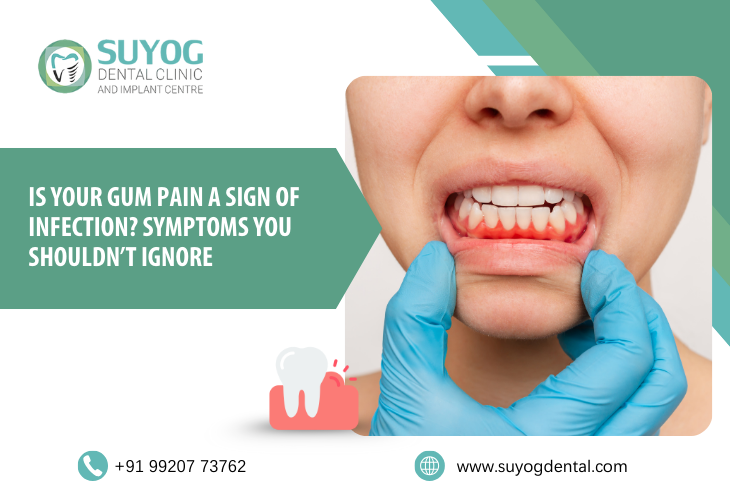
Is Your Gum Pain a Sign of Infection? Symptoms You Shouldn’t Ignore
Imagine walking on a carpet where something sharp is hidden underneath; every step becomes uncomfortable, unpredictable, and bothersome. Gum pain feels very similar.
You may not always see what’s causing the discomfort, but every time you eat, brush, or talk, the irritation reminds you that something isn’t right.While many people dismiss gum pain as a temporary issue, it can often be an early sign of infection. And when symptoms like bleeding gums appear, it’s time to pay attention. Early care not only prevents complications but also preserves your oral health in the long run.
If you're experiencing persistent bleeding or discomfort, visit Suyog Dental Clinic for bleeding gum treatment in Mahim, one of the safest steps you can take for your dental well-being.
Understanding what your symptoms truly mean can help you act before minor gum issues turn into advanced gum disease.
Why Gum Pain Should Never Be Ignored
Gum pain is your body’s way of signaling that something needs attention. Unlike tooth pain, which is often sharp and obvious, gum discomfort can start subtly. But ignoring it can lead to increasing inflammation, infection, and even tooth loss.
Common reasons why people overlook gum symptoms:
1. Pain seems mild or inconsistent
2. Over-the-counter painkillers offer temporary relief
3. Busy schedules delay dental visits
4. Belief that “bleeding gums are normal.”
It’s important to remember: gums should not bleed during brushing or flossing. Any consistent pain or bleeding is a sign that your gums need professional evaluation.
Common Causes of Gum Pain
Understanding why your gums hurt can help you take the right steps toward effective treatment.
1. Gingivitis (Early Gum Disease)
This is the most common cause of gum pain. Gingivitis happens when plaque accumulates along the gumline, irritating the gums and causing:
1. Redness
2. Swelling
3. Bleeding during brushing
4. Bad breath
Early intervention is simple and effective, but delaying treatment can lead to more severe gum disease.
2. Periodontitis (Advanced Gum Disease)
If gingivitis is ignored, it can progress into periodontitis, a more serious infection involving the tissues and bone supporting your teeth. Symptoms include:
1. Persistent gum pain
2. Gum recession
3. Loose teeth
4. Deep gum pockets
This condition requires timely dental care to prevent long-term damage.
3. Injury or Trauma
Hard brushing, sharp food, or accidental cuts can irritate the gums. This discomfort is usually temporary but should be monitored for signs of infection.
4. Food Trapped Under the Gums
Popcorn kernels, seeds, or tiny food particles can lodge under the gumline, causing sudden pain, swelling, and even infection.
5. Hormonal Changes
Pregnancy, puberty, and menopause can increase gum sensitivity due to hormonal fluctuations.
6. Vitamin Deficiencies
A lack of vitamin C or K can weaken gums and increase bleeding.
7. Dental Appliances
Ill-fitting dentures, braces, or retainers may irritate gum tissue, creating soreness and inflammation.
8. Canker Sores or Oral Infections
Ulcers inside the mouth can cause sharp pain when eating or talking.
Knowing the cause is the first step toward effective treatment, but only a professional evaluation can confirm the exact reason behind your discomfort.
What You Should Know About Bleeding Gum Treatment
Why Do Gums Bleed?
Bleeding gums are usually a sign of irritation or infection. When plaque isn’t removed properly, bacteria accumulate, triggering inflammation. As the gums weaken, even gentle brushing can cause bleeding.
Other contributing factors include:
1. Smoking
2. Stress
3. Poor oral hygiene
4. Medical conditions like diabetes
If bleeding occurs frequently, then look no further than Suyog Dental Clinic for bleeding gum treatment in Mahim, as it is important to prevent the condition from worsening.
Symptoms That Suggest Your Gum Pain May Be an Infection
Not all gum pain means you have an infection, but certain symptoms strongly indicate that your gums need immediate attention.
1. Persistent Bleeding
If your gums bleed every time you brush or floss, it’s not normal. This is often the earliest sign of gum disease.
2. Swollen or Puffy Gums
Healthy gums appear firm and pink. Swelling means inflammation or infection.
3. Bad Breath That Doesn’t Go Away
Bacteria trapped under the gumline release unpleasant odors, leading to chronic bad breath.
4. Receding Gums
When gums pull away from the teeth, it exposes the roots and increases sensitivity.
5. Pus or Discharge From Gums
This indicates an active infection and requires urgent care.
6. Pain When Chewing
Inflamed gums or infected bone can make biting uncomfortable.
7. Loose Teeth
This is a sign of advanced gum disease when the supporting tissues begin to deteriorate.
8. Temperature Sensitivity
Sensitivity to hot or cold foods can indicate exposed tooth roots or weakened gum tissue.
If you notice any of these symptoms, early and professional gum care is essential.
How Gum Infections Are Treated at Suyog Dental Clinic
At Suyog Dental Clinic, gum care is personalized to each patient’s condition. Here’s how treatment is typically approached:
1. Professional Cleaning (Scaling)
This removes plaque and tartar from the gumline, reducing inflammation and stopping infection from progressing.
2. Deep Cleaning (Root Planing)
For more advanced cases, deep cleaning smoothens the roots to prevent bacteria from reattaching.
3. Medication or Antimicrobial Therapy
Antibiotic gels or oral medication may be used to control bacterial growth.
4. Laser Gum Therapy (If Recommended)
Laser treatment gently removes infected tissue with minimal discomfort and faster healing.
5. Gum Surgery (For Severe Cases)
If the infection has spread deep into the tissues, surgical intervention may be required to restore gum health and prevent tooth loss.
What You Can Do at Home to Reduce Gum Pain
While professional care is essential, certain habits can support gum healing:
1. Brush with a soft-bristle brush
2. Floss daily to remove trapped food
3. Use an antiseptic mouthwash
4. Avoid tobacco
5. Increase vitamin C intake
6. Maintain regular dental checkups
These steps help maintain gum health and prevent reinfection.
When to See a Dentist Immediately
You should schedule a dental visit right away if:
Gum pain lasts longer than three days
Gums bleed consistently
You notice swelling or pus
You have bad breath that doesn’t resolve
Your teeth feel loose
Chewing becomes painful
Early intervention prevents long-term damage and preserves your oral health.
FAQs
1. Can gum pain go away on its own?
Mild irritation may improve, but pain caused by infection will not resolve without treatment. Ignoring it can worsen the condition.
2. Why do my gums bleed even though I brush regularly?
You may be brushing too hard or have underlying gum disease. Professional cleaning is usually necessary to eliminate the cause.
3. Is gum infection serious?
Yes. If untreated, it can damage bone and tissue, leading to tooth loss.
4. How long does it take to treat a gum infection?
Mild cases may improve within a week after cleaning; severe cases require longer follow-up.
5. Can stress cause gum pain?
Indirectly, yes. Stress can reduce immunity and increase inflammation, making gum infection more likely.
Take the First Step Toward Healthier Gums
Gum pain is more than just a minor irritation; it can be an early warning sign of infection. Paying attention to your symptoms and seeking timely care protects you from bigger dental problems later on.
If you’re dealing with persistent discomfort or bleeding, timely gum treatment can help restore gum health and prevent complications. At Suyog Dental Clinic, our staff provides compassionate care, precise diagnosis, and effective treatment for bleeding gum treatment in Mahim to ensure your gums heal fully and comfortably. Your smile deserves the right attention, and taking action today can make all the difference.