



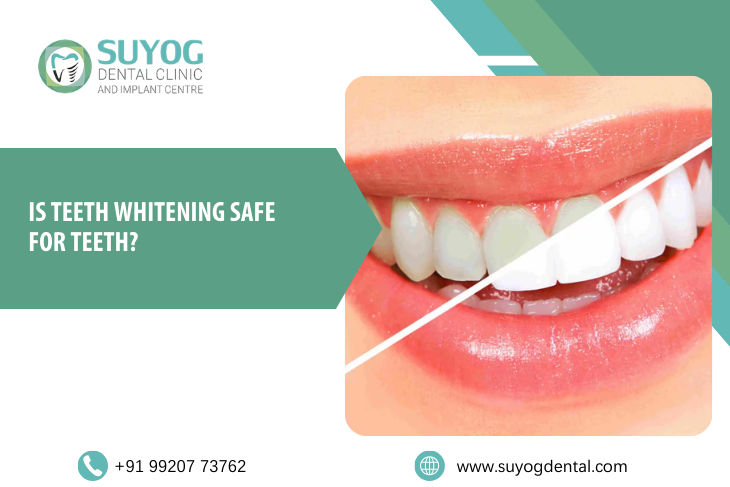
Is Teeth Whitening Safe for Teeth?
Your mirror has heard a lot of thoughts. Especially the ones that start with, “Were my teeth always this dull?”
It usually hits during regular moments. Brushing at night. Getting ready for work. Or zooming into a selfie before posting and thinking, Something looks off. Not bad. Just… tired. Yellowed. A little older than you feel inside.
That’s when the question shows up. Quietly. Almost cautiously.
Should I opt for teeth whitening? and Is teeth whitening safe for teeth?
Because on one hand, you want a brighter smile. On the other hand, you’ve heard things. Sensitivity. Damage. Enamel wearing away. And suddenly the idea of whitening feels exciting and risky at the same time.
At Suyog Dental Clinic, this is one of the most common conversations people have before even sitting in the chair for teeth whitening in Mahim. And honestly, it’s a fair concern. So let’s talk about it properly. No fear-mongering. No over-promising. Just clear answers, the way you’d want someone to explain it to you.
Why Do Teeth’s Colour Change in the First Place?
Teeth don’t turn yellow overnight. It’s a slow process. A mix of habits, time, and biology doing their thing.
Some common reasons:
1. Tea and coffee stains that build up over years
2. Smoking or tobacco use
3. Certain foods with strong pigments
4. Natural ageing of enamel
5. Some medicines taken earlier in life
Enamel, the outer layer of your teeth, is white. Underneath it sits dentin, which is naturally yellowish. As enamel thins with age, the yellow shows through more.
That’s why whitening works on many people. And also why results differ from person to person.
So… Is Teeth Whitening Actually Safe?
Short answer? Yes.
But with conditions.
Teeth whitening, when done correctly, doesn’t harm healthy teeth. The concern usually comes from how whitening is done, not the whitening itself.
Professional whitening uses controlled amounts of whitening agents. These break down stains without stripping enamel. The process is planned. Timed. Monitored.
Problems usually start when:
1. Whitening is done too often
2. Teeth already have cracks or cavities
3. Gums are unhealthy
4. Instructions aren’t followed
That’s why dentists always check your teeth before recommending teeth whitening to make sure it’s actually safe for you.
People opting for teeth whitening under professional care generally see good results without long-term issues.
What Happens During Teeth Whitening?
A whitening gel is applied to your teeth. This gel releases oxygen molecules that penetrate enamel and break apart stain particles. The tooth itself doesn’t change. The stains do.
That’s it.
No drilling. No scraping. No reshaping.
The process might feel warm or tingly for a short time. Some people experience temporary sensitivity. That usually settles within a day or two.
Sensitivity: The Most Talked-About Side Effect
Let’s talk about the elephant in the room.
Yes, sensitivity can happen.
But it’s usually:
1. Mild
2. Temporary
3. Manageable
Sensitivity occurs because whitening opens microscopic pores in enamel for a short time. This allows temperature changes to reach nerves more easily.
It doesn’t mean your enamel is damaged. It just needs time to rehydrate and settle.
Dentists manage this by:
1. Using desensitising agents
2. Adjusting gel strength
3. Spacing sessions properly
Most people visiting Suyog Dental Clinic for teeth whitening in Mahim report sensitivity that fades quickly, not something that lingers.
When Whitening Might Not Be the Right Choice
Whitening isn’t the only solution. And a good dentist will tell you that upfront.
Whitening may not be advised if:
1. You have untreated cavities
2. Gums are inflamed or bleeding
3. Teeth have cracks or worn enamel
4. Discolouration is due to internal tooth damage
In these cases, whitening won’t fix the problem. Sometimes it can even make discomfort worse.
That’s why whitening always comes after a dental check-up. Not before.
Professional Whitening vs Casual Whitening
There’s a big difference between dentist-supervised whitening and random methods people try on their own.
Professional whitening:
1. Uses regulated materials
2. Is customised to your teeth
3. Comes with safety checks
4. Has predictable results
Dentists offering teeth whitening usually customize the process based on enamel thickness, stain type, and sensitivity history.
The goal isn’t just “white.”
It’s healthy and brighter, not fragile.
How Long Do Whitening Results Last?
This depends more on habits than the treatment itself.
Whitening isn’t permanent. Teeth don’t forget how to stain.
Results usually last longer if:
1. Tea and coffee intake is controlled
2. Smoking is avoided
3. Regular cleanings are done
4. Good brushing habits are followed
Some people choose touch-ups after a year or two. That’s normal. Whitening isn’t meant to be repeated frequently. Spacing matters.
Myths That Need to Go
Let’s clear a few things up.
1. Myth: Whitening damages enamel Truth: Done correctly, it doesn’t.
2. Myth: Whiter means healthier Truth: Healthy teeth aren’t always paper-white.
3. Myth: More whitening equals better results Truth: Overdoing it causes sensitivity, not extra brightness.
4. Myth: Everyone gets the same shade Truth: Natural tooth colour varies. Results vary too.
Whitening Isn’t About Perfection
This part matters.
Teeth whitening isn’t meant to make your smile look fake or blinding. It’s about lifting stains so your natural colour shows through.
At Suyog Dental Clinic, dentists usually aim for believable brightness. The kind that makes people think you look refreshed, not altered.
And frankly? That’s what most people want anyway.
When People Feel the Difference
The change isn’t just visual.
People often say:
1. They smile more without thinking
2. They stop covering their mouth
3. Lipstick shades look better
4. Photos feel less stressful
That confidence shift is subtle but real.
And it doesn’t come from extreme whitening. It comes from feeling comfortable with your own smile again.
Is Teeth Whitening Safe for Long-Term Oral Health?
Yes, when:
1. Done under dental supervision
2. Spaced properly
3. Combined with good oral care
Whitening doesn’t weaken teeth over time if done responsibly. In fact, many people become more careful about oral hygiene after whitening because they want to maintain results.
That’s a win.
People choosing teeth whitening in Mahim under professional guidance, like Suyog Dental Clinic, generally experience improvement without compromising dental health.
So… Should You Do It?
If your teeth are healthy and stains are external, whitening can be a safe, effective option.
But it should always start with a conversation. Not a quick decision.
A dentist looks at:
1. Tooth structure
2. Gum health
3. Existing restorations
4. Sensitivity risk
And then suggests what actually suits you.
A Brighter Smile, Done Right
Teeth whitening isn’t about chasing trends. It’s about feeling comfortable when you smile. Comfortable laughing. Comfortable being photographed without overthinking.
When done correctly, whitening is safe, controlled, and surprisingly simple.
If you’ve been considering teeth whitening in Mahim, the best first step at Suyog Dental Clinic isn’t the treatment itself. It’s a proper evaluation. That’s where clarity replaces doubt.
And that’s what safe whitening really looks like.