



Braces vs Aligners: Which Is Better for You?
You’re scrolling late at night.
A photo pops up. Someone you know has suddenly… perfect teeth.
No metal. No wires. Just a confident smile that looks effortless.
That’s when the question hits you.
Not loudly. Not dramatically. Just enough to stay with you.
Braces vs aligners which is better?
If you’re reading this, chances are you’re not just curious. You’re considering it. Maybe for yourself. Maybe for your child. Maybe because you’ve postponed it long enough and now you want answers that actually make sense.
Welcome. Let’s talk about this honestly, without dental jargon, sales talk, or robotic explanations.
First, Let’s Clear One Thing Up
Orthodontic treatment is not just about straight teeth.
It’s about:
-
Comfortable chewing
-
Proper jaw alignment
-
Easier cleaning
-
Long-term oral health
-
And yes, confidence
Both braces and aligners aim for the same destination. The journey is what differs. That’s where most people get confused when comparing braces vs aligners which is better.
What People Really Want to Know (But Rarely Ask Directly)
Before diving into definitions, let’s address the unspoken questions:
-
Will this be painful?
-
Will people notice?
-
Will it fit my lifestyle?
-
Will it actually work for my teeth?
-
Is it worth the money?
Every decision around orthodontic treatment circles back to these thoughts. So let’s answer them, one by one, through the lens of both options.
Traditional Braces: The Tried and Tested Route
Braces have been around for decades, and there’s a reason they’re still widely used.
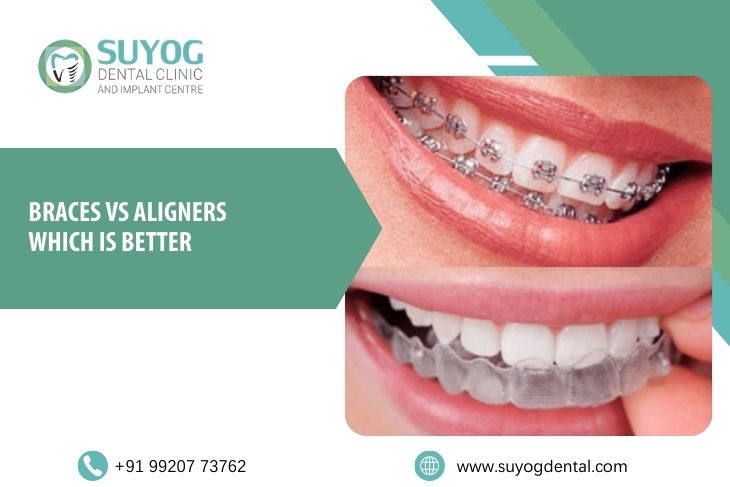
They consist of metal or ceramic brackets fixed to the teeth, connected by wires that are adjusted periodically to guide teeth into position.
Why do people still choose braces?
-
Extremely effective for complex alignment issues
-
Works continuously, no reminders needed
-
Suitable for all age groups
-
No risk of forgetting to wear them
Braces don’t rely on discipline. Once they’re on, they do their job around the clock.
Common concerns with braces:
-
Visibility, especially metal braces
-
Initial discomfort after adjustments
-
Extra care needed while cleaning
-
Food restrictions
Despite these, braces remain a powerful solution. For many cases, especially severe crowding or bite problems, they are often the most predictable option when weighing braces vs aligners, which is better.
Clear Aligners: The Modern, Low-Profile Option
Aligners are transparent trays custom-made to fit over your teeth. You wear them most of the day, switching to a new set every few weeks as your teeth gradually move.
They’re popular for a reason.
Why people love aligners:
-
Nearly invisible
-
Removable while eating
-
Easier to maintain oral hygiene
-
No food restrictions
-
More comfortable for many patients
For adults, especially aligners feel less disruptive. Meetings, social events, photos, and daily life continue without the obvious signs of treatment.
But aligners come with responsibility.
Things people don’t always realise:
-
Must be worn 20 to 22 hours a day
-
Skipping wear time delays results
-
Not ideal for all orthodontic cases
-
Requires commitment and consistency
When people debate braces vs aligners, which is better, aligners often win on appearance but lose points if discipline is an issue.
Clear Aligners vs Braces: Lifestyle Matters More Than You Think
This comparison often tips depending on your routine.
Ask yourself:
-
Do I travel often?
-
Can I commit to wearing aligners daily?
-
Will I remember to put them back after meals?
-
Do I prefer a fixed solution?
For someone with a busy schedule but good habits, aligners fit seamlessly. For someone who prefers not to think about treatment daily, braces feel simpler.
This is why the debate around clear aligners vs braces doesn’t have a single right answer. It’s personal.
Pain, Discomfort, and Adjustment Periods
Let’s be honest. No orthodontic treatment is completely painless.
With braces:
-
Discomfort usually appears after adjustments
-
The mouth needs time to adapt to the brackets
-
Ulcers can occur initially
With aligners:
-
Pressure is felt when switching trays
-
Mild soreness for a day or two
-
Fewer mouth injuries overall
Most patients describe aligners as gentler, but both methods involve gradual pressure. The discomfort fades as your mouth adjusts.
Pain should never be unbearable. At Suyog Dental Clinic in Mahim, patient comfort is monitored closely, regardless of the method chosen.
Treatment Time: Faster Isn’t Always Better
Many people assume aligners work faster. Sometimes they do. Sometimes they don’t.
Treatment time depends on:
-
Complexity of the case
-
Bone structure
-
Patient compliance
-
Type of correction needed
Braces often take:
-
18 to 24 months for complex cases
Aligners may take:
-
6 to 18 months for mild to moderate cases
So when asking braces vs aligners, which is better, remember that speed depends on your teeth, not just the tool.
Cleaning and Maintenance: Daily Reality Check
This part affects your everyday life more than expected.
With braces:
-
Brushing takes longer
-
Flossing needs special tools
-
Food can get stuck easily
With aligners:
-
Trays must be cleaned daily
-
Teeth must be brushed before reinserting
-
Forgetting trays can be inconvenient
Both require effort. Aligners demand discipline. Braces demand patience.
Aesthetics and Confidence
Let’s not pretend this doesn’t matter.
For teenagers, braces are common and accepted. For adults, visibility can feel uncomfortable.
Aligners offer discretion. Braces offer certainty.
Neither choice is about vanity. It’s about feeling comfortable while improving your smile.
Cost Considerations
Cost varies depending on:
-
Case complexity
-
Treatment duration
-
Type of braces or aligners used
Aligners often cost slightly more, mainly due to technology and customization. Braces can be more economical, especially for long-term or complex treatments.
A consultation at Suyog Dental Clinic, Mahim helps clarify costs upfront so expectations stay realistic.
So, Braces vs Aligners: Which Is Better?
Here’s the honest answer.
Better is not universal. Better is individual.
Braces may be better if:
-
Your case is complex
-
You want a fixed solution
-
You don’t want to worry about compliance
Aligners may be better if:
-
You want minimal visibility
-
Your case is mild to moderate
-
You can commit to wearing them consistently
The right choice comes from clinical evaluation, not internet polls.
Why a Proper Consultation Changes Everything
Photos online can’t diagnose bite issues. Advice from friends can’t assess jaw alignment.
An orthodontic consultation looks at:
-
Tooth position
-
Bite function
-
Jaw health
-
Long-term stability
At Suyog Dental Clinic in Mahim, treatment planning focuses on what works for your teeth, your lifestyle, and your comfort, not trends.
There’s No “Best.” There’s Just What Works.
Choosing between braces and aligners is not about following what’s popular. It’s about understanding your needs and trusting professional guidance.
If you’ve been stuck in the loop of researching braces vs aligners, which is better, consider this your sign to stop scrolling and start consulting.
Because the best smile transformations don’t begin online.
They begin in a dental chair, with the right questions and honest answers.